

 0
0
 0
0
This guide covers everything you need to know about forex market analysis 2026.
1.0 Executive Summary: Understanding Forex Market Analysis 2026
When exploring forex market analysis 2026, it is important to approach the subject with patience and a willingness to learn. Many successful traders emphasize that understanding forex market analysis 2026 thoroughly before making decisions is the foundation of long-term growth in the forex market.
The global Foreign Exchange (Forex) market continues to be the largest and most liquid financial market in the world. As of early 2026, data from the Bank for International Settlements (BIS) indicates a significant increase in daily trading volume, now estimated at $9.6 trillion per day [1]. This growth underscores the increasing participation of retail and institutional investors. This analysis provides a data-driven overview for beginner traders entering the market in 2026, focusing on market dynamics, currency pair volatility, and strategic risk management.
2.0 Market Size and Growth Trajectory
Recent reports from the Bank for International Settlements (BIS) and market analysis firms confirm the substantial growth of the Forex market. The compound annual growth rate (CAGR) is projected at 10.6% from 2024 to 2029 [2]. This expansion is fueled by increased accessibility through online brokerage platforms, heightened global economic integration, and rising interest from retail investors.
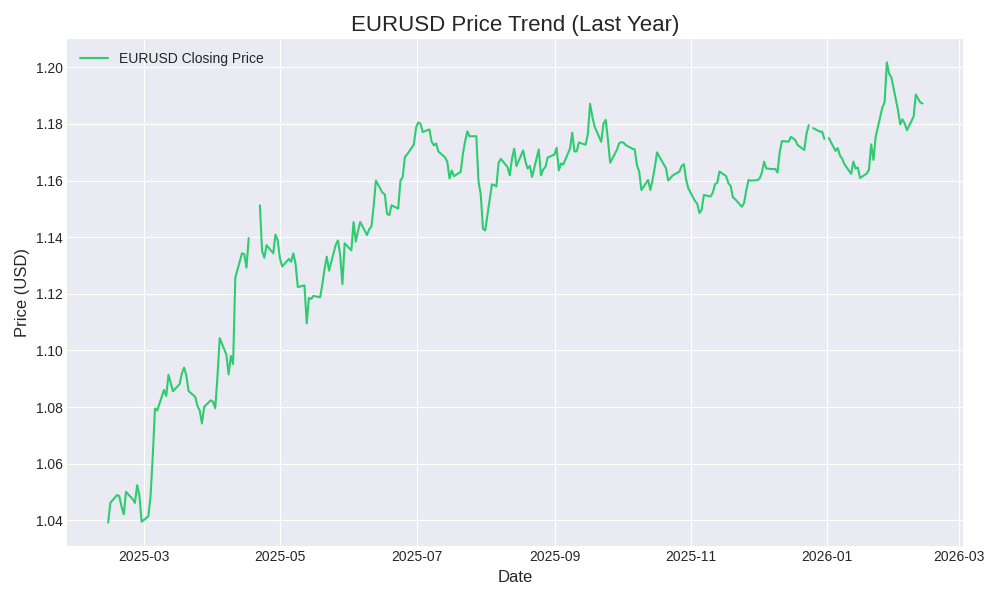
Figure 1: EUR/USD Price Trend (Last Year). Data sourced from Yahoo Finance.
3.0 Volatility Analysis of Major Currency Pairs
For beginner traders, understanding volatility is paramount for risk management. Major currency pairs, while generally more stable than exotics, exhibit distinct volatility patterns.
3.1 EUR/USD
The EUR/USD pair remains the most traded currency pair, accounting for a significant portion of daily volume. Our analysis of the past year’s daily closing prices (Figure 1) shows moderate volatility, making it a suitable entry point for beginners. The pair is heavily influenced by the monetary policies of the European Central Bank (ECB) and the US Federal Reserve.
3.2 GBP/USD
The GBP/USD pair (Figure 2) historically exhibits higher volatility than EUR/USD, often influenced by UK economic data releases and political developments. The wider price swings can present more significant opportunities, but also carry increased risk.
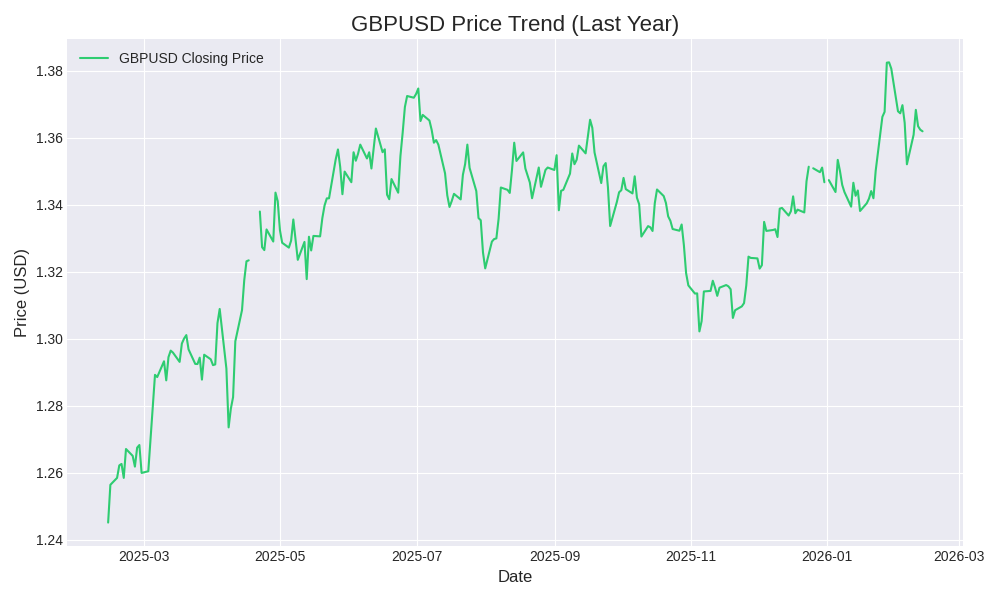
Figure 2: GBP/USD Price Trend (Last Year). Data sourced from Yahoo Finance.
3.3 USD/JPY
The USD/JPY pair (Figure 3) is sensitive to changes in risk sentiment in the global markets, often acting as a “safe-haven” currency. Its price action is closely tied to the policies of the Bank of Japan and the US Federal Reserve.
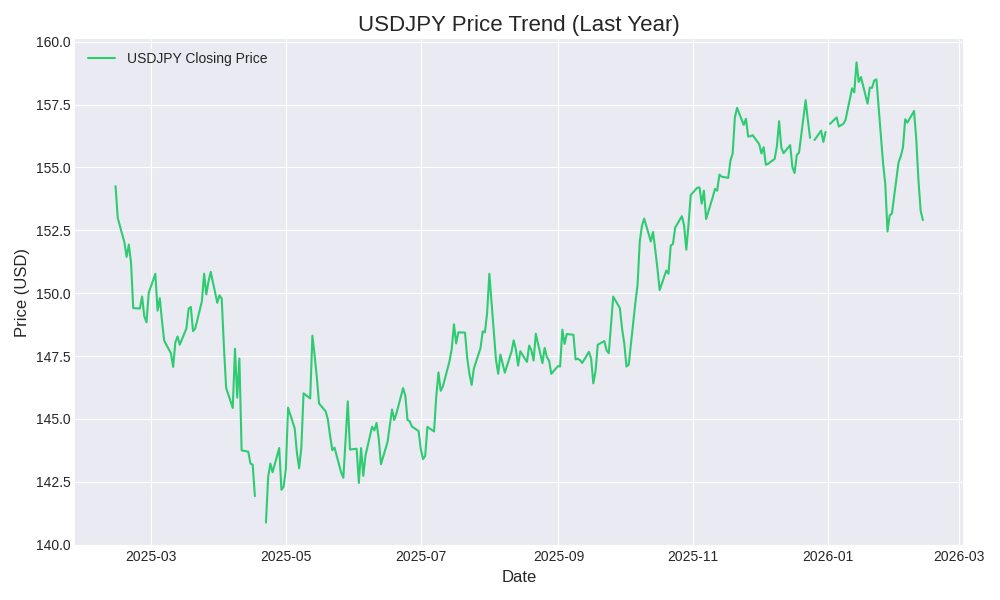
Figure 3: USD/JPY Price Trend (Last Year). Data sourced from Yahoo Finance.
4.0 Quantitative Risk Management
A systematic approach to risk is critical for long-term success. Two key concepts are the Risk-Reward Ratio and the use of stop-loss orders.
4.1 The Risk-Reward Ratio
This ratio quantifies the potential profit of a trade relative to its potential loss. A trader might target a 1:3 risk-reward ratio, risking $100 for a potential $300 gain. This framework allows for profitability even with a win rate below 50%. For example, with a 1:3 ratio, a trader only needs to be correct on 4 out of 10 trades to be profitable:
- 4 Wins x $300 = +$1,200
- 6 Losses x $100 = -$600
- Net Profit = +$600
4.2 Carry Trade as a Source of Return
Another source of return is the carry trade, which profits from the interest rate differential between two currencies. For example, by buying a currency with a high interest rate (e.g., Australian Dollar at 4%) and funding it with a currency with a low interest rate (e.g., Japanese Yen at 0.1%), a trader can earn a return of nearly 4% annually from the interest rate differential alone, in addition to any capital appreciation from the exchange rate movement.
5.0 The Psychological Dimension of Trading
Beyond the numbers, trading is a psychological endeavor. According to market analysis, common psychological pitfalls that lead to losses include:
- Overtrading: Attempting to recover losses by making too many impulsive trades.
- Emotional Decision-Making: Letting fear or greed dictate trading decisions rather than a predefined strategy.
- Holding Losing Positions Too Long: Hoping a losing trade will reverse, leading to larger losses.
6.0 Conclusion and Recommendations
The Forex market in 2026 presents significant opportunities for well-prepared beginner traders. A successful approach must be grounded in a thorough understanding of market data, a disciplined risk management strategy, and an awareness of the psychological challenges. We recommend that new traders begin with a demo account to test strategies in a risk-free environment before committing real capital.
References
[1] BestBrokers. (2026). US Forex Trading Market Size and Statistics in 2025. Retrieved from https://www.bestbrokers.com/forex-trading/us-forex-trading-market/
[2] Technavio. (2025). Foreign Exchange Market Size 2025-2029. Retrieved from https://www.technavio.com/report/foreign-exchange-market-industry-analysis
Understanding forex market analysis 2026 is essential for anyone starting their journey in the forex market. As you continue to learn about forex market analysis 2026, remember that consistent education and practice are the keys to developing confidence and competence in this field.

0 %

0 %

0 %

0 %

0 %

0 %
For more information, visit the Bank for International Settlements (BIS) for official forex market data, or explore educational resources at Investopedia Forex.
As this guide demonstrates, mastering forex market analysis 2026 requires dedication and a structured approach. Whether you are just beginning or revisiting the fundamentals, a solid understanding of forex market analysis 2026 will serve as the cornerstone of your trading education.
0 %
0 %
0 %
0 %
0 %
0 %
Video Tutorials
Watch these helpful video tutorials to deepen your understanding of the concepts covered in this article:
